Safety
The utilities already in the ground are located, and the bore path is set around them, before the drill moves. The head is tracked for the length of the shot so the crew stays off gas, water, power, and communications lines.
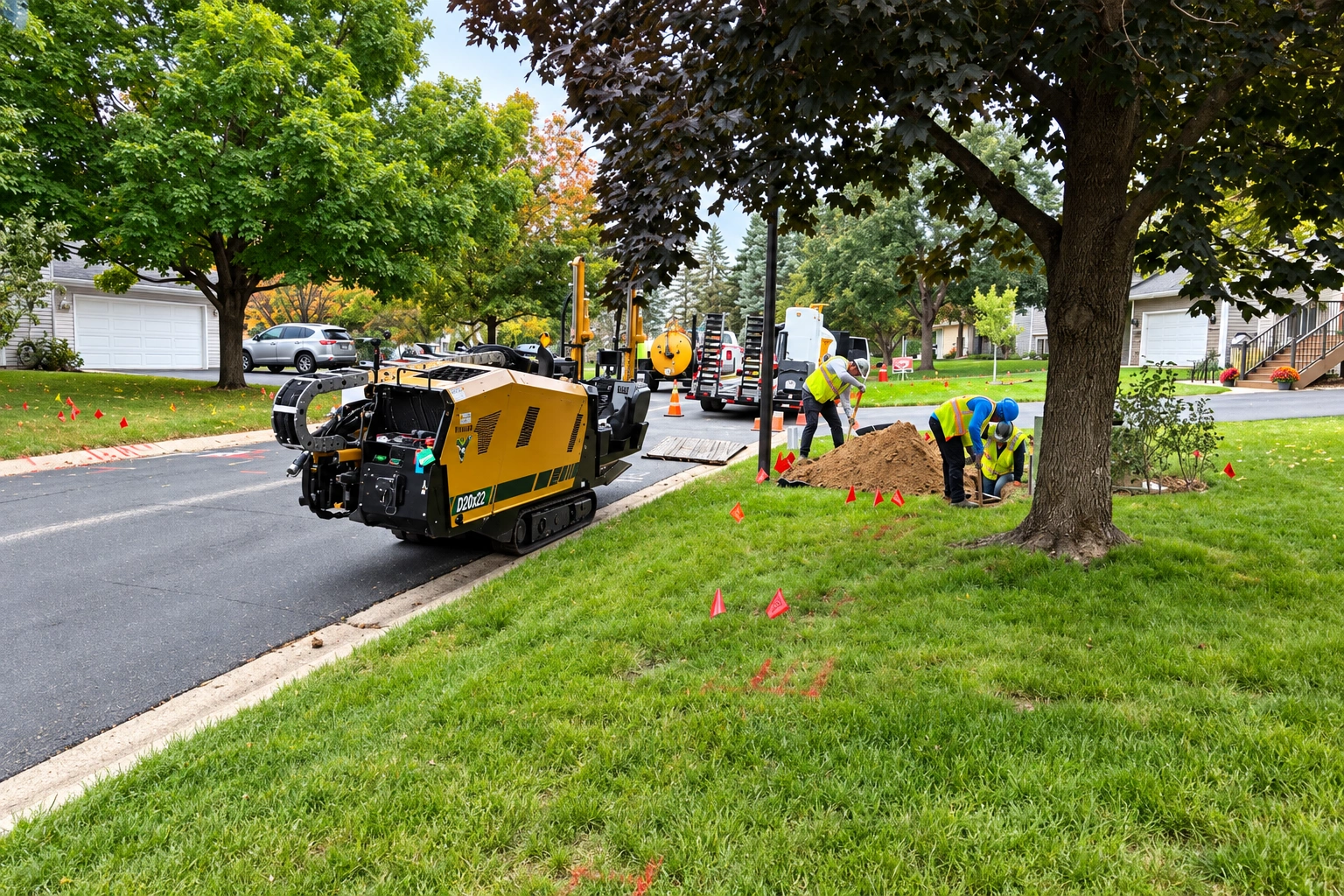
Horizontal directional drilling, conduit, and fiber placement for telecommunications and infrastructure contractors.
Discuss your projectFocused on what’s below.
Drill Net Group is a Florida-based underground infrastructure company. We support telecommunications and utility projects with directional drilling, conduit installation, and fiber placement, from the planned route through field execution.
A bore is steered from an entry pit to an exit pit, under the street, the drive, or the landscaping, so the surface does not have to be opened for the whole run. The crew locates what is already in the ground, tracks the drill head, reams the path, and pulls the conduit and fiber through.
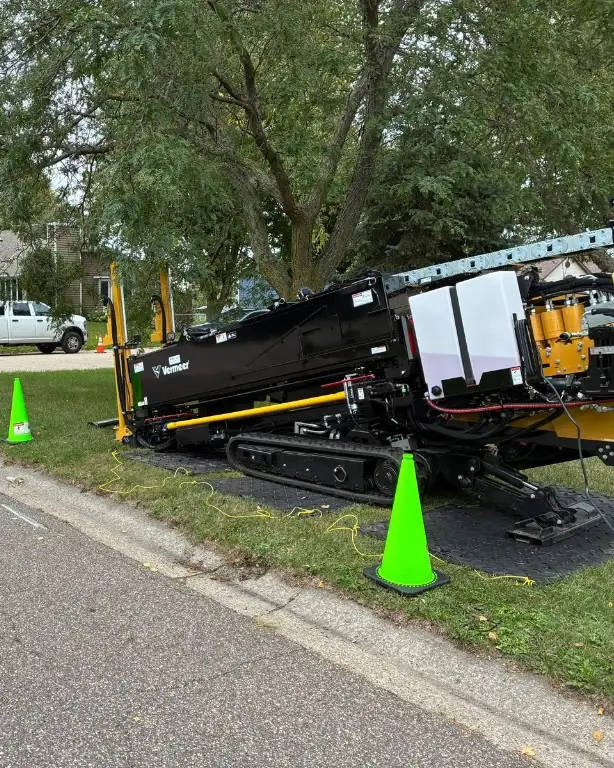
Horizontal directional drilling puts a planned route underground and avoids opening the ground for the full length of the run. Each shot is set to the soil, the utilities already there, and the pipe the job needs.
The rig steers a pilot bore from the entry pit to the exit pit. The head is tracked the whole way. The bore is reamed, the conduit is pulled back through, and the pits are closed so the street or the yard can go back to use.
Existing utilities are identified, and the entry, the exit, and the path between them are set before the drill moves. Depth and clearance come from the locates and from the specifications for the job.
The rig steers the pilot bore along that path. The head is tracked from entry to exit so the crew stays on the line and off the utilities beside it.
The bore is reamed to the diameter the conduit needs. The pipe is pulled back through the completed path, and the fiber goes in where the route calls for it.
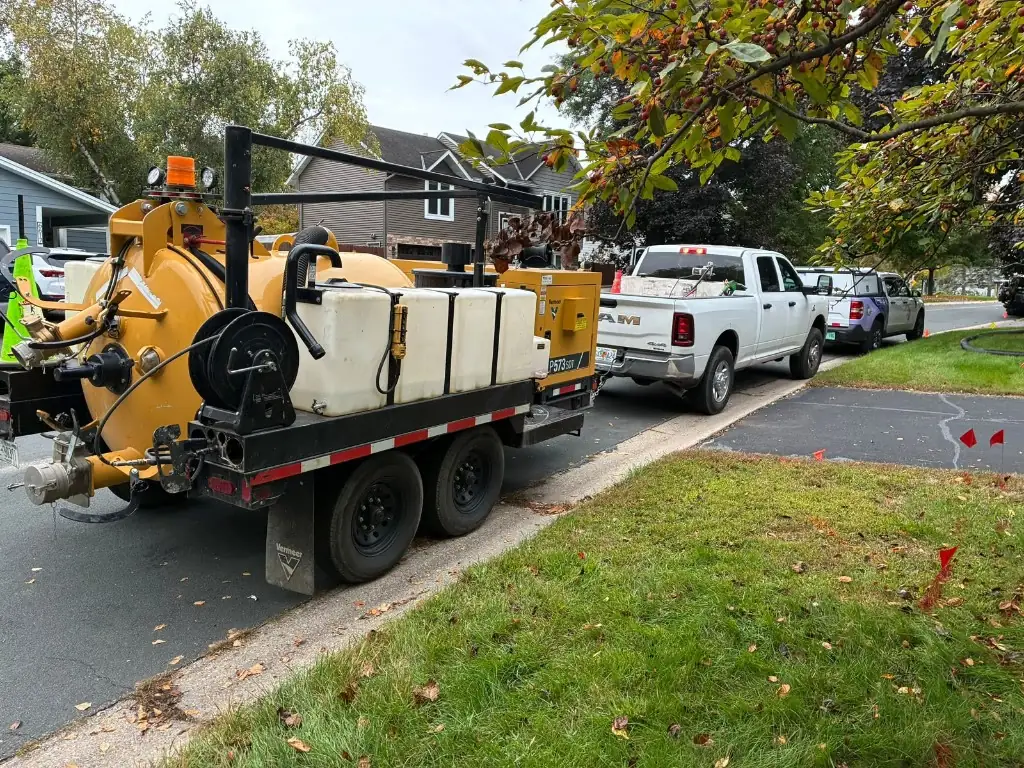
The equipment behind the work.
The shot is planned with the contractor, then drilled and closed in the field.
The utilities already in the ground are located, and the bore path is set around them, before the drill moves. The head is tracked for the length of the shot so the crew stays off gas, water, power, and communications lines.
Conduit and fiber go in on the path that was planned. Depth, alignment, and the pipe at the exit pit are checked against that path before the crew leaves the site.
Scope, site conditions, and progress stay visible to the contractor. If the ground or the locates change the shot, that is raised while the plan can still be adjusted.
The focus is the Atlantic coast, from Florida to New York. Most of the work is on residential streets and crossings for telecommunications and underground utility projects.
Send the location, the scope, and the schedule you have in mind. A route description or drawings help. Call or write, and we will go through the requirements with your team.
Phone +1 (347) 754-2219
Email drillnetgroupllc@gmail.com
Discuss your project